



ADC Payloads
ADC Cytotoxins
ADC payloads are cytotoxic agents that induce target cell death in Antibody Drug Conjugates (ADCs). An ADC is a targeted agent composed with a monoclonal antibody, a linker and a payload. The payload is the most important component as it determines the potency to kill cancer cells of an ADC.
There are many payloads which are currently being used such as Calicheamicins, Duocarmycins, Pyrrolobenzodiazepines (PBDs), Camptothecins, Daunorubicins/Doxorubicins, Auristatins and Maytansinoids. They can be divided in two classes based on their mechanism of action, DNA damaging agents and tubulin inhibitors. Among them Calicheamicins, Duocarmycins and PBDs are DNA minor grove binders, Camptothecins and Daunorubicins/Doxorubicins are topoisomerase inhibitors, which are DNA damaging agents. Auristatins and Maytansinoids are tubulin inhibitors.
ADC Payloads Isoform Specific Products
-
ADC Payloads
(217)
View all products
-
Auristatin
(15)
View all products
-
Calicheamicins
(1)
View all products
-
Camptothecins
(42)
View all products
-
Daunorubicins/Doxorubicins
(11)
View all products
-
Duocarmycins
(18)
View all products
-
Maytansinoids
(9)
View all products
-
Pyrrolobenzodiazepines
(8)
View all products
-
Traditional Cytotoxic Agents
(24)
View all products
All Product Categories
-
ADC Payloads Related Products (370)
Related Products (370)

-
Antibodies (2)
-
Related Compound Screening Libraries (1)
-
ADC Payloads Isoform Comparison
-
7-Methylol-9-methoxy-10-F-camptothecin
 0 ImagesCat. No.: HY-176777CAS No.: 2927485-59-27-Methylol-9-methoxy-10-F-camptothecin (Compound D6-1) is a derivative of Camptothecin (HY-16560). 7-Methylol-9-methoxy-10-F-camptothecin can be used as a cytotoxic payload for synthesis of antibody-drug conjugates (ADCs).
-
Duocarmycin MA
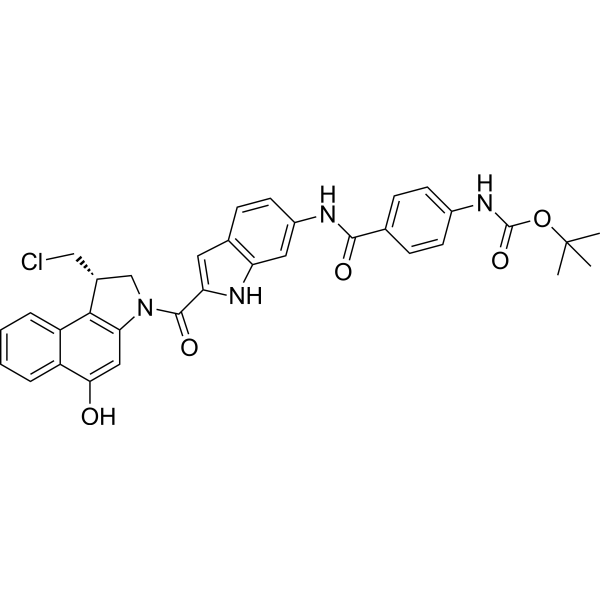 0 ImagesCat. No.: HY-18987CAS No.: 1613286-57-9Duocarmycin MA is an antibody agent conjugates (ADCs) toxin. Duocarmycin is a DNA alkylating agent that binds in the minor groove. Duocarmycin MA can be used against multi-agent resistant cell lines.
-
17-GMB-APA-GA
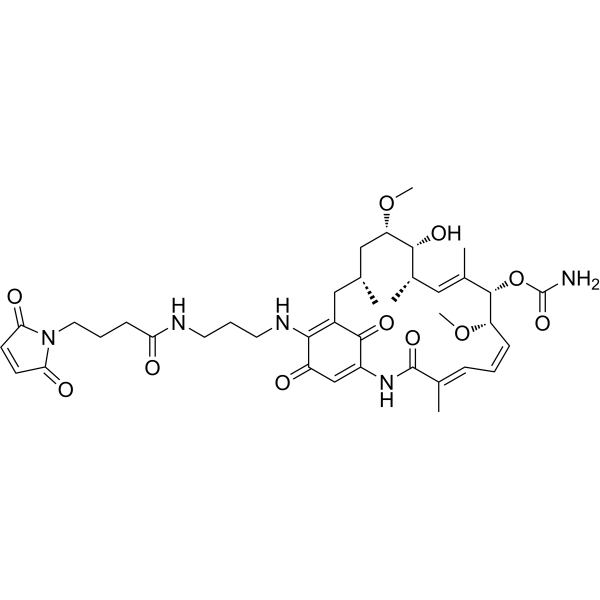 0 ImagesCat. No.: HY-130997CAS No.: 256337-10-717-GMB-APA-GA is an ADC Cytotoxin. 17-GMB-APA-GA is a potent HSP90 inhibitor and used for latent T. gondii infection research.
-
Tubulin polymerization-IN-38
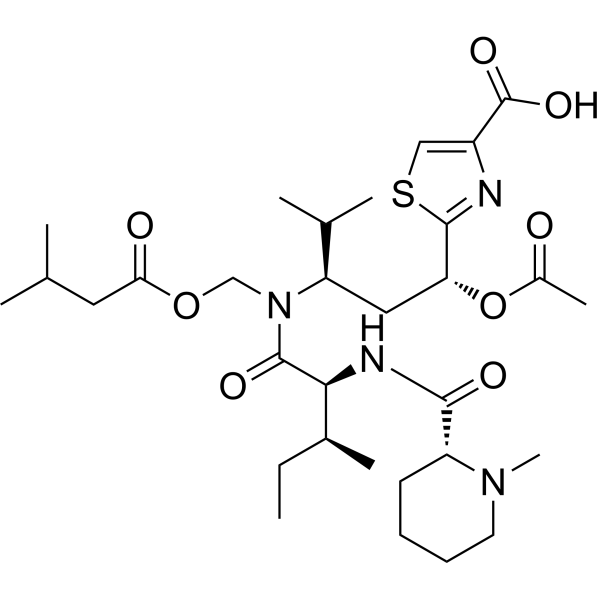 0 ImagesCat. No.: HY-148193CAS No.: 1005192-31-3Tubulin polymerization-IN-38 is an analogue of Tubulysin (HY-128914), a potent anticancer agent. Tubulin polymerization-IN-38 inhibits tubulin polymerization (tubulin polymerisation), thereby inducing apoptosis (apoptosis). Tubulysin series products are potent anti-microtubule toxins (anti-microtubule toxins) and can be used as ADC cytotoxins (ADC Cytotoxin) to synthesize ADCs.
-
Exatecan analogue 1
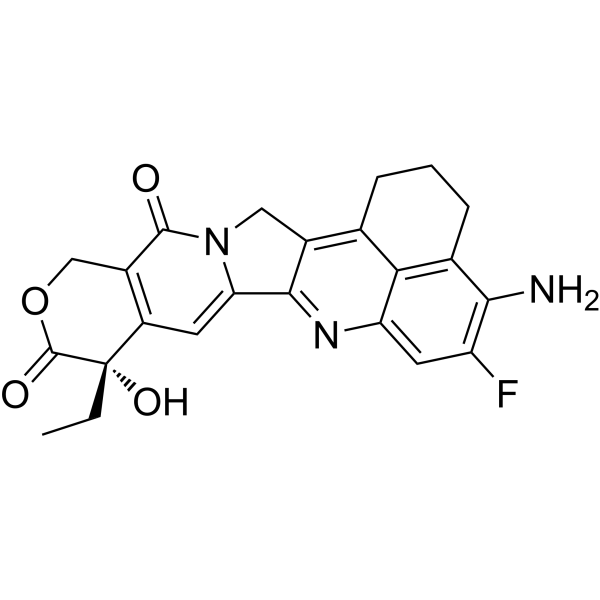 0 ImagesCat. No.: HY-157795CAS No.: 2671770-58-2Exatecan analogue 1 (Icp-3) is a Exatecan (HY-13631) analogue. Exatecan analogue 1 can be used in the synthesis of antibody-drug conjugates (ADCs)
-
Tubulysin D
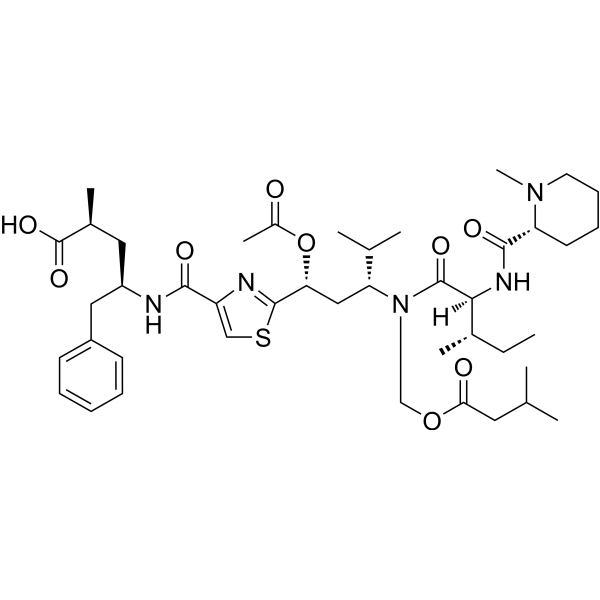 0 ImagesCat. No.: HY-N2348CAS No.: 309935-57-7Tubulysin D is a highly cytotoxic anti-microtubule toxin (anti-microtubule toxins) that is synthesized as an ADC cytotoxin (ADC Cytotoxin). Tubulysin D can be isolated from the myxobacteria Archangium geophyra and Angiococcus disciformis. Tubulysin D displays extremely potent cytotoxic activity in mammalian cells, including multidrug-resistant cell lines, with IC50 values in the low nanomolar range. Tubulysin D inhibits microtubule/Tubulin polymerization and leads to cell cycle arrest and apoptosis.
-
NH2-methylpropanamide-Exatecan TFA
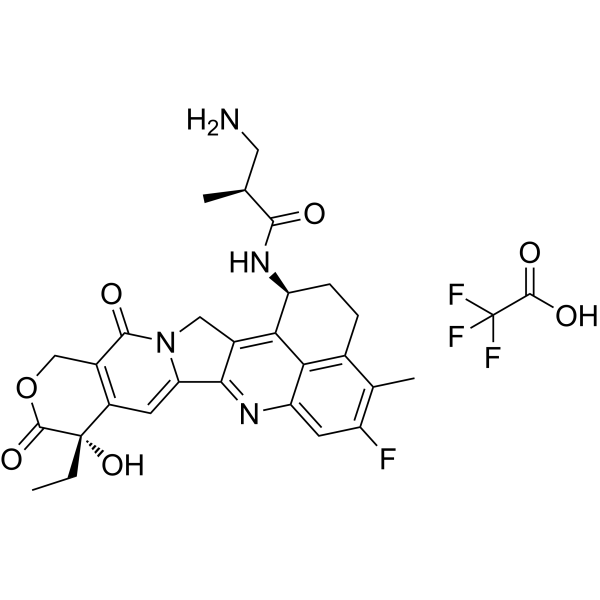 0 ImagesNH2-methylpropanamide-Exatecan TFA is a methylpropanamide-modified Exatecan (HY-13631), which is the common ADC Cytotoxin used in the synthesis of ADC. Exatecan is a DNA topoisomerase I inhibitor, with an IC50 of 2.2 μM (0.975 μg/mL), and can be used in cancer research.
-
DBCO-PEG4-GGFG-Triptolide
 0 ImagesCat. No.: HY-188015CAS No.: 3086791-85-4DBCO-PEG4-GGFG-Triptolide is a triptolide-based antibody-drug conjugate (ADC) payload, consisting of a DBCO click chemistry reactive group, a PEG4 linker, a cathepsin-cleavable GGFG peptide segment, and triptolide. DBCO-PEG4-GGFG-Triptolide binds to antibodies via glycosylation conjugation, releases active triptolide intracellularly to exert cytotoxic effects, and is commonly used in combination with camptothecin-class toxins (Exatecan (HY-13631) / DXd (HY-13631D)) for the preparation of dual-toxin ADCs.
-
INX-SM-6
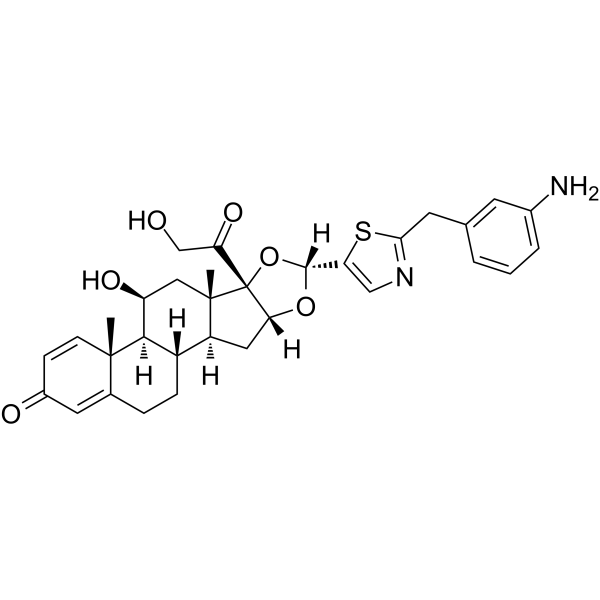 0 ImagesINX-SM-6 can be used for targeted delivery of anti-inflammatory agent. INX-SM-6 inhibits LPS-induced IL-1β production in human PBMCS.
-
Mertansine-d3
 0 ImagesCat. No.: HY-19792S2Synonyms: DM1-d3; Maytansinoid DM1-d3Mertansine-d3 (DM1-d3) is the deuterium labeled Mertansine (HY-19792). Mertansine (DM1) is a microtubulin inhibitor and is an antibody-conjugatable maytansinoid that is developed to overcome systemic toxicity associated with maytansine and to enhance tumor-specific delivery. Mertansine can be attached to a monoclonal antibody with a linker to create an antibody-drug conjugate (ADC).
-
Mytoxin B
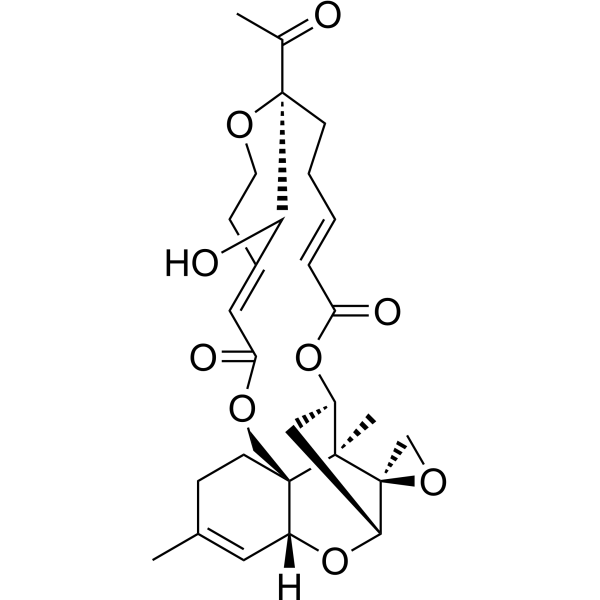 0 ImagesCat. No.: HY-131055CAS No.: 105049-15-8Mytoxin B is an ADC cytotoxin. Mytoxin B is a satratoxin-type trichothecene macrolide and is similar to the effect of LY294002 (HY-10108). Mytoxin B induces cell apoptosis via PI3K/Akt pathway.
-
7Ethanol-10NH2-11F-Camptothecin
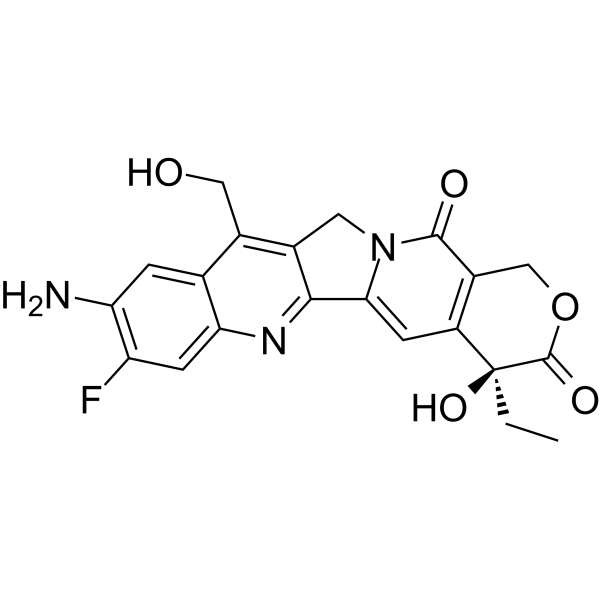 0 ImagesCat. No.: HY-156517CAS No.: 2873460-31-07Ethanol-10NH2-11F-Camptothecin is a Camptothecin (HY-16560) analogue that serves as an ADC cytotoxin for the synthesis of antibody-drug conjugates (ADCs). 7Ethanol-10NH2-11F-Camptothecin can inhibit tumor growth and is used in cancer research.
-
PBD derivative-1
 0 ImagesCat. No.: HY-178270CAS No.: 2305851-17-4PBD derivative-1 (Compound 7-8) is a derivative of PBD, and PBD is the payload in antibody-drug conjugates (ADCs). PBD derivative-1 can be used for the synthesis of ADCs.
-
Tubulysin IM-1
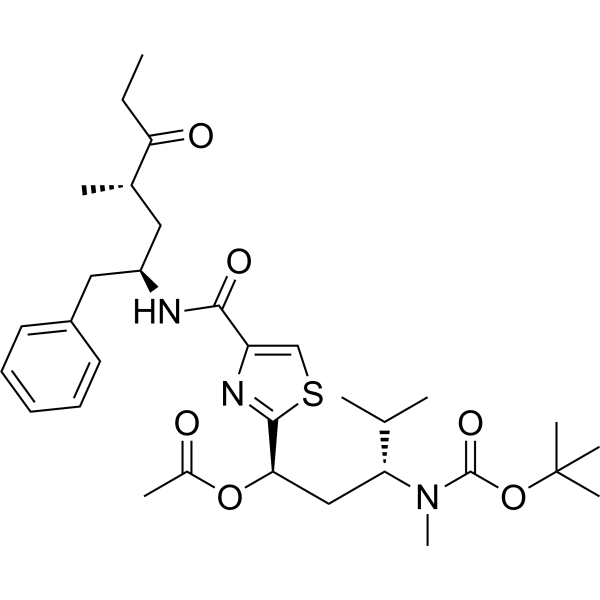 0 ImagesCat. No.: HY-130958Tubulysin IM-1 is a microtubule/Tubulin inhibitor that can act as an ADC cytotoxin (ADC Cytotoxin) and an anti-microtubule toxin (anti-microtubule toxins). Used for ADC synthesis.
-
Cy3.5 maleimide
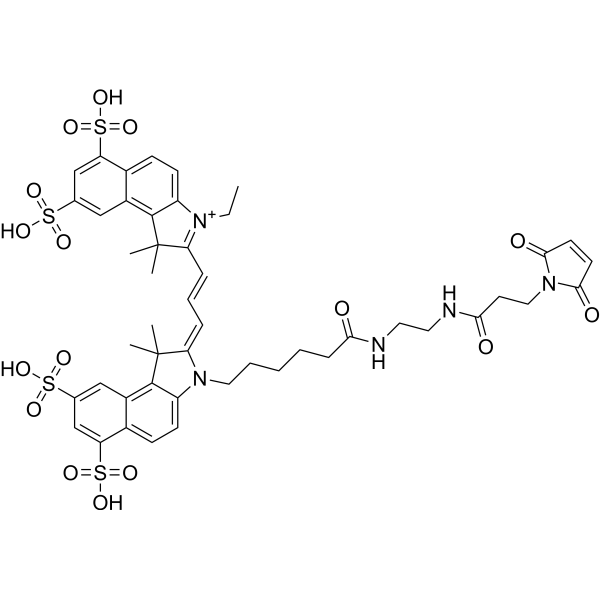 0 ImagesCat. No.: HY-D2231Cy3.5 maleimide is a relatively water-soluble fluorescent dye. Cy3.5 maleimide is soluble in organic solvents, including DMF, DMSO and acetonitrile and so on.
-
(S,S)-D211
 0 ImagesCat. No.: HY-122715CAS No.: 1971075-99-6(S,S)-D211 is a stereoisomer of D211. (S,S)-D211 belongs to PBD dimer family with DNA damage activity. (S,S)-D211 can be used as a cytotoxic payload for synthesis of antibody-drug conjugates (ADCs).
-
MMAF-methyl ester
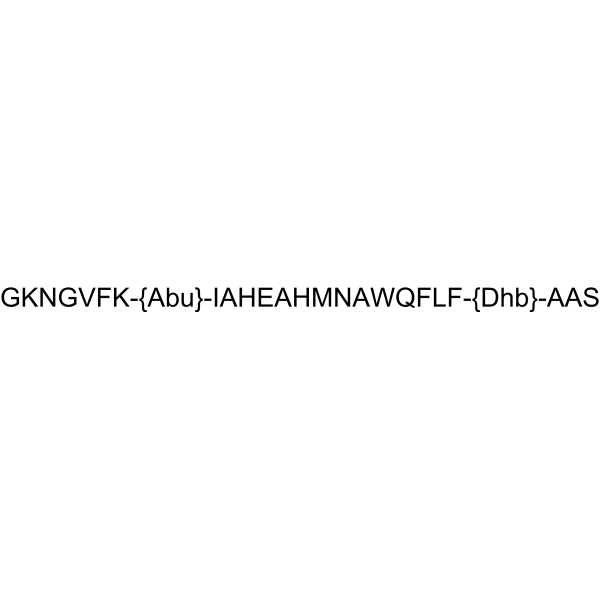
 0 ImagesCat. No.: HY-W190923CAS No.: 2353409-70-6MMAF-methyl ester is a methylated derivative of the tubulin inhibitor MMAF (HY-15579), and serves as a pharmaceutical intermediate for the development of antibody-drug conjugates (ADCs) and small-molecule drug conjugates (SMDCs).
-
Corixetan
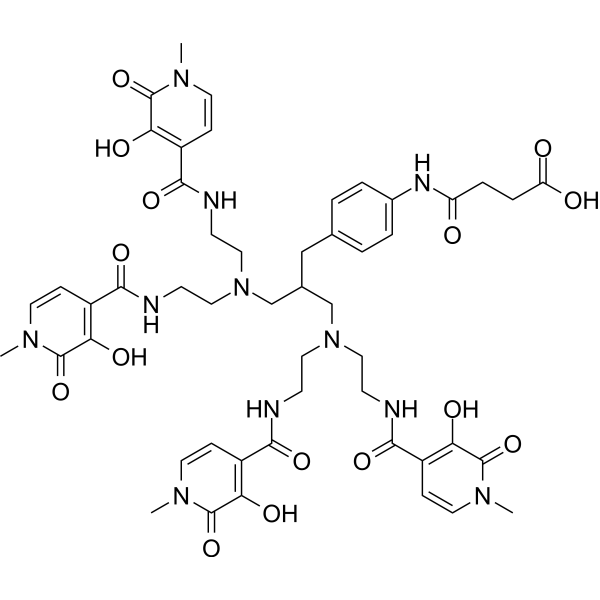 0 ImagesCat. No.: HY-132851CAS No.: 1952359-26-0Corixetan is a highly efficient thorium chelator. Corixetan can efficiently complex Th-227 with sufficient in vivo stability.
-
Hemiasterlin derivative-1
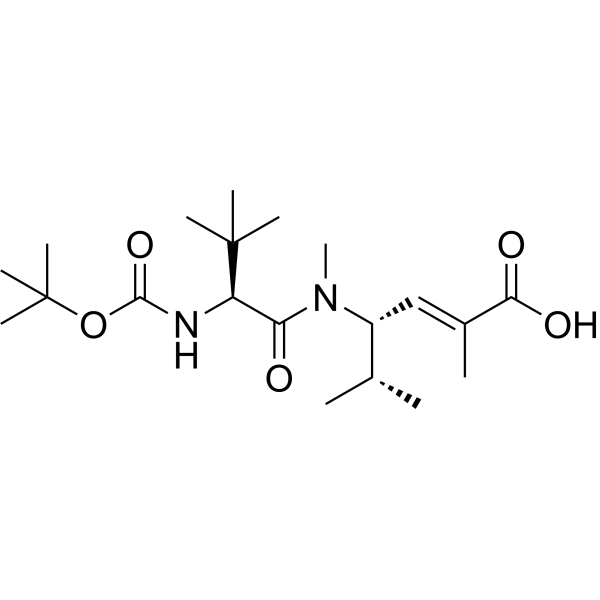 0 ImagesCat. No.: HY-145148CAS No.: 1887046-60-7Hemiasterlin derivative-1 is a hemiasterlin derivative. Hemiasterlin derivative-1 can be used for the synthesis of the antibody-drug conjugate (ADC).




